


Ghostwriting for Health, Wellness, and Lived-Experience Authors
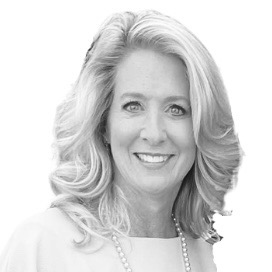
By Deborah Holmen, M.Ed. NBCT

Most of the people who reach out to me have been carrying a book idea for months. Sometimes years. They're physicians, therapists, nurses, integrative practitioners, recovery coaches, parents who walked through something hard with a child. They've sat with patients and clients in their most vulnerable moments. They've stood beside loved ones in hospital rooms. They've gathered insights that could genuinely change how someone else heals — if only they could make it onto the page.
What they're short on is rarely the story. It's bandwidth, structure, and somebody to sit across from them and ask the right questions.
I'm Deborah Holmen, author, freelance writer, and ghostwriter for wellness professionals, healthcare providers, educators, and people with lived-experience stories worth telling. My published memoir, It Takes a Lot of Shit to Grow Beautiful Flowers, comes out of my own life. My byline runs in Medium, The Good Men Project, A Parent is Born, HOME Florida, and a number of regional health and wellness publications. For three years, I've also provided scientific research and editorial support to the author of Unstoppable, a bestselling mental-health book that has now sold more than 80,000 copies.
I work almost entirely on books in the health and wellness space: alternative medicine, biohacking, epigenetics, functional medicine, genomics, gut microbiome, integrative medicine, mental health, neuroscience, and women's health. That focus is intentional. It means I already speak the language of your field, I'm familiar with the research landscape, and I understand the ethical weight of telling a health story responsibly.
Why support matters when you're writing a health book
Writing a book is a long process, even when you're not running a practice or raising a family. Most of the people I work with are doing both. Adding a sixty-thousand-word manuscript on top of patient care, parenting, teaching, or recovery work isn't a time problem. It's a depth problem. You can't think clearly enough, long enough, or often enough to shape a book while you're also showing up for everyone else.
A trusted collaborator turns a vague idea into a clear, week-by-week process. It also keeps you out of the traps health authors most often fall into: textbooks dressed up as memoirs, manuscripts buried in jargon, and heartfelt drafts that never quite cohere.
Here's what working with me actually looks like.
I listen to how you talk. The cadence of it, what you emphasize, the phrases you reach for. Then I write so your readers feel like they're sitting with you, not reading a stranger.
I translate the science without flattening it. Health and wellness ideas are often complex. I keep the rigor and lose the jargon so a reader without a clinical background can follow along.
When your book includes claims that need backing, I work from a four-tier source hierarchy with peer-reviewed journals as the gold standard. I use The Chicago Manual of Style, 17th edition, throughout. That's not a flourish. It's how serious nonfiction gets taken seriously by agents, publishers, and readers who can spot a soft source from across the room.
I handle hard material with care. Trauma, loss, fear, recovery, the moments where a diagnosis changed everything. These belong in books like yours, and they need to be written by someone who won't drop them. I don't invent outcomes, and I don't make medical promises you can't ethically stand behind.
And I do the writing myself. I use software to stay organized, but the work of listening, shaping, and choosing the right word is done by a human who's thinking about you and your reader, not a template.
How the work unfolds
I keep my client load small, usually two to three books a year, so I can stay fully present with each one. The general flow looks like this.
We start with a short fit call. About twenty to thirty minutes. You tell me your idea, your goals, and where you are in the process. I tell you how I work and what kind of support fits. We both decide whether this is a match.
If we move forward, I send a written scope of work: what we're creating, the timeline, and the investment. All projects are governed by a work-for-hire contract drafted by my attorney with industry-standard terms. No royalties. No future claims on your book. The manuscript belongs to you.
I review your existing material — notes, talks, articles, earlier drafts — and then schedule interviews. The interviews are where your voice and the real reason you're writing this book come into focus.
From there, I draft your manuscript in sections. You read each section and respond with what feels right, what doesn't, and what needs to be added or clarified. We revise as we go, so the book grows in the right direction.
Once we have a complete draft, we refine. We tighten language, strengthen transitions, and smooth the tone. The result is a manuscript ready for the next step, whether that's pitching agents, approaching publishers, or going independent.
What it costs
A serious nonfiction book is a serious investment. My fees are benchmarked against industry data published by Gotham Ghostwriters, Reedsy, and the Rhodes ghostwriting survey for experienced nonfiction ghostwriters in health and wellness. Most full-length projects in this category fall in the upper five figures to low six figures, with the final number depending on the scope of your story, the state of your existing material, and how much research the book will require.
I'll send you a quote after our fit call. There are no royalties on my end, and there are no surprise fees on yours.
A note on what this is, and isn't
You stay the author. My role is to be your thinking partner and the writer on the page: asking the questions, suggesting structure, drafting the prose so your message comes through clearly and consistently. I won't overpromise outcomes or put words in your mouth that you wouldn't ethically stand behind. Your integrity is the most valuable thing on the back cover, and I treat it that way.
I'm also selective about who I take on. I work with authors whose stories I can stand behind, whose ethics I trust, and whose readers I genuinely want to serve. I'd encourage you to be just as selective about whoever ends up writing your book.
If you're ready
If you've been carrying a book idea — about your work as a clinician, your years of teaching, a personal health story you know could help others — and you're ready to stop turning it over in your head and start turning it into pages, write to me. We'll set up a twenty-minute fit call and find out whether this is the right project for both of us.
Your experience has already changed lives one room at a time. A book extends that reach to people you'll never meet.



Comments